
Functional
Did the intended outcome occur through the recorded path?
Execute the intended outcome across declared contexts, keep functional, visual, and accessibility evidence together, then diagnose the change before it reaches Review.
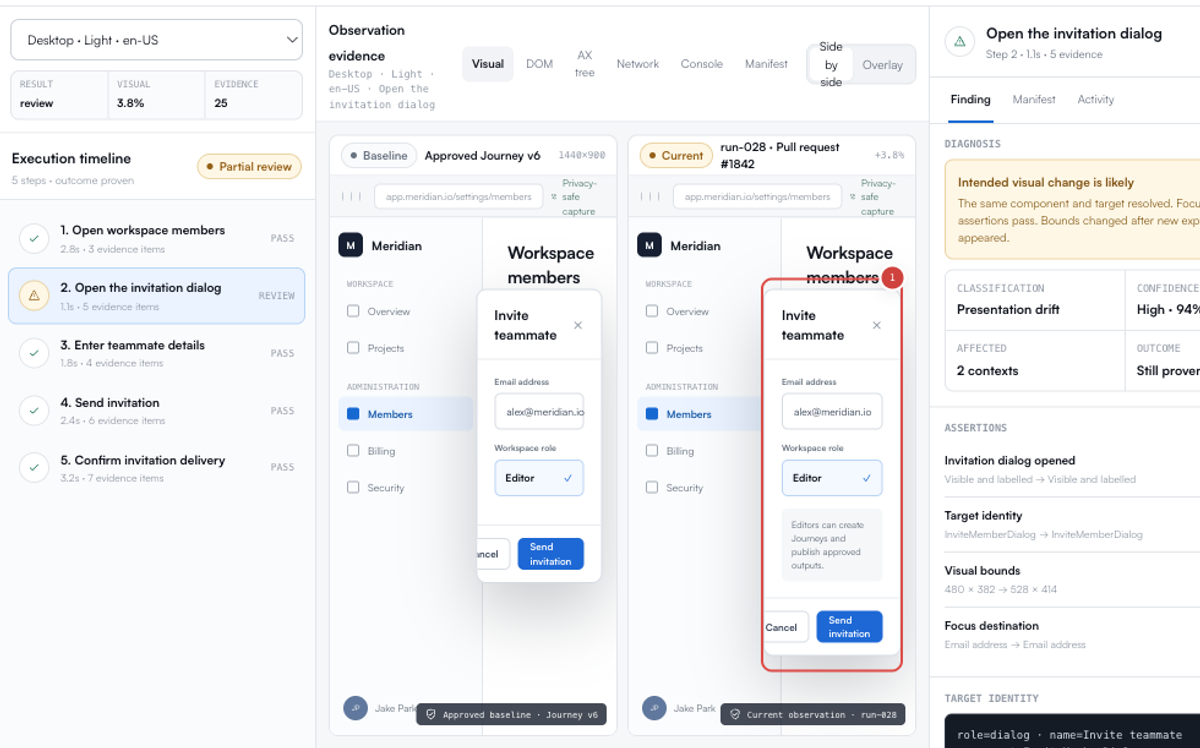
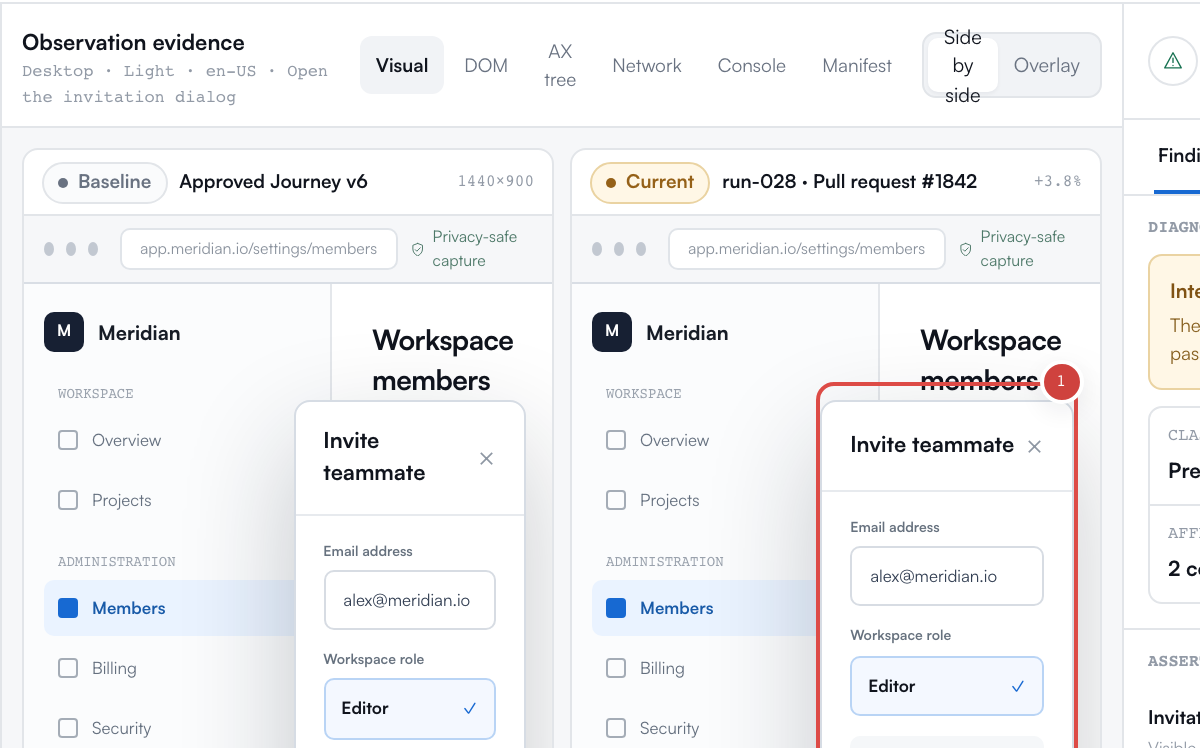
A Run does not turn a Journey into an anonymous pass. It records the exact version, environment, identity, and outcome being inspected.
Invitation flow · version 7
Desktop · Light · en-US
Run 028 · pull request #1842
Outcome proven · review required
Functional, visual, and accessibility truth are peers. Each stays attached to the selected Journey Version and declared context.
Did the intended outcome occur through the recorded path?
What changed in the observed interface, and where?
Do names, focus, and interaction remain meaningful?
Evidence makes the distinction explicit: product change, target or state mismatch, and runner or infrastructure failure are not the same consequence.
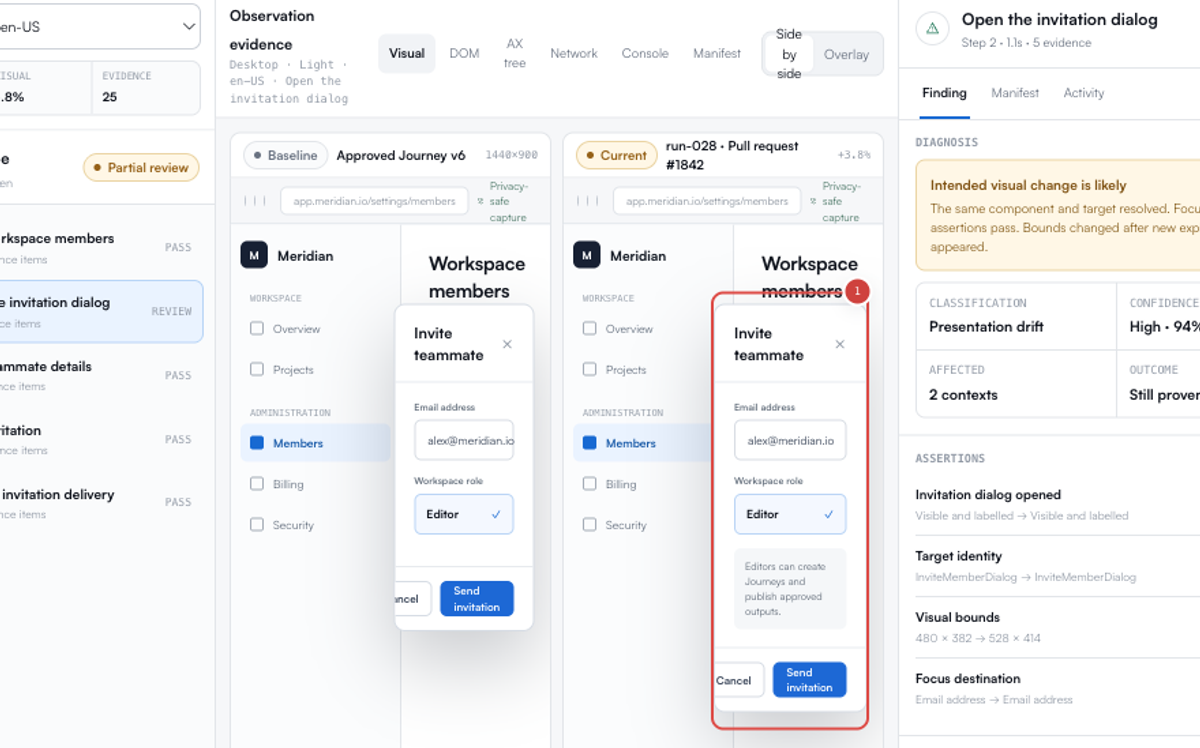
Review receives the selected Run, context, step, difference, evidence, and lineage—so the decision keeps its source instead of becoming a separate handoff.
See how Review records a decisionStart with one Journey and retain the evidence every next version needs.